
When you’re planning an event or conference, the AV decision often feels straightforward.
You’ve chosen the venue, they have an in-house AV team, and it seems easier to keep everything under one roof. Fewer suppliers. Less coordination. One less thing to think about. And sometimes, that’s exactly the right call. But here’s what we see time and again.
The AV choice doesn’t just affect how your event runs. It shapes how it feels, how your message lands, and ultimately how your audience remembers it. That’s where the real decision sits. Not just convenience, but outcome.
The comfort and beauty of in-house AV
In-house AV teams are designed to deliver consistency. They know the venue, understand the infrastructure, and can get things up and running efficiently. For straightforward events, that works well.
But most in-house models are built around standardisation. The same setups, the same equipment, the same approach, repeated across multiple events. That can create limitations when your event needs something more considered or more tailored. Not because the team isn’t capable of hiring in equipment but because the model isn’t designed for flexibility or there are cost limitations.
When the experience matters more than the setup
This is where an external AV partner changes the dynamic.
Instead of working within a fixed offering, you’re starting with the outcome you want and building backwards from there.
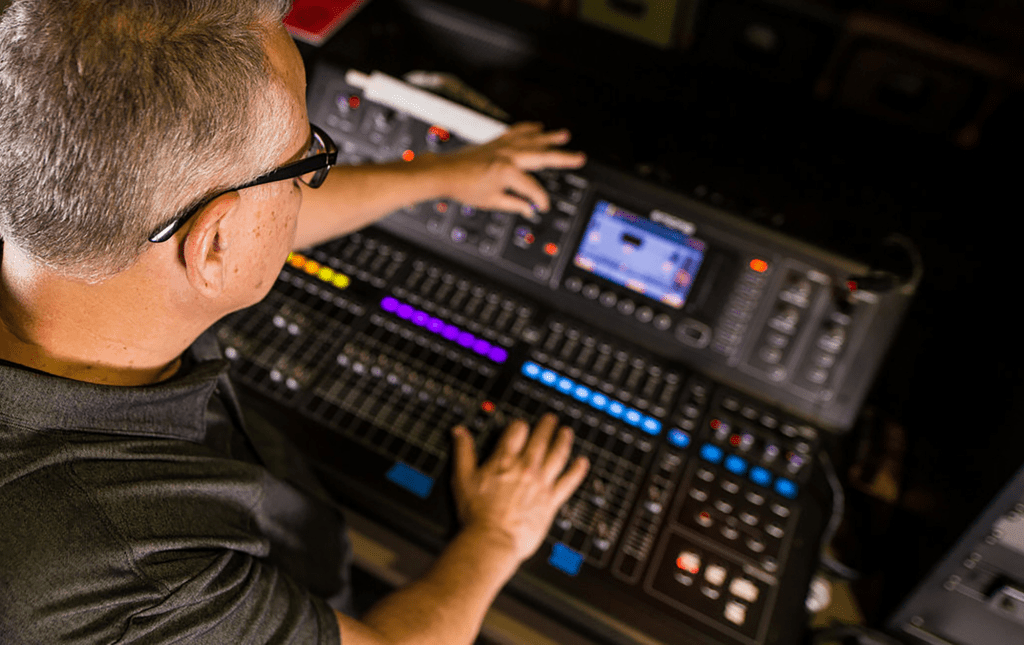
That might mean rethinking how a room is used, adjusting lighting to guide attention, or choosing display solutions based on content rather than availability. It’s a different way of approaching AV. Less about delivering equipment. More about shaping the experience.
The uncertainty organisers don’t always plan for
One of the biggest challenges with relying solely on in-house AV is not knowing exactly what you’re getting until you’re well into the process.
Will it flex if your brief changes? Will it push for a better outcome, or stick to the standard format? Will it feel like a priority, or one of many events happening that week?
When you bring in an external team you already trust, that uncertainty disappears.
You’re not starting from scratch. You’re building on experience. As the saying goes, if you’re onto a good thing, stick to it.

A simple way to think about the choice
If you’re weighing up in-house AV versus bringing in your own supplier, it helps to step back and look at what your event actually needs.
In-house AV can be the right fit when:
- Your event is relatively simple and low-risk
- The venue setup already suits your requirements
- Budget is the primary driver
- You don’t need much customisation
An external AV partner is often the better choice when:
- The experience of the event really matters
- You need flexibility beyond a standard package
- There are multiple elements to manage, from content to lighting to flow
- You want a team that works as part of your organising team, not alongside it
- You’ve worked with a supplier before and trust how they deliver
In simple terms:
In-house AV supports the venue.
An external partner supports your event and the experience.
Being more than just a supplier
This is the shift we’re seeing more and more.
AV is no longer just a technical service sitting in the background. It plays a central role in how people engage, what they take away, and how they talk about your event afterwards.
That’s why the relationship matters.
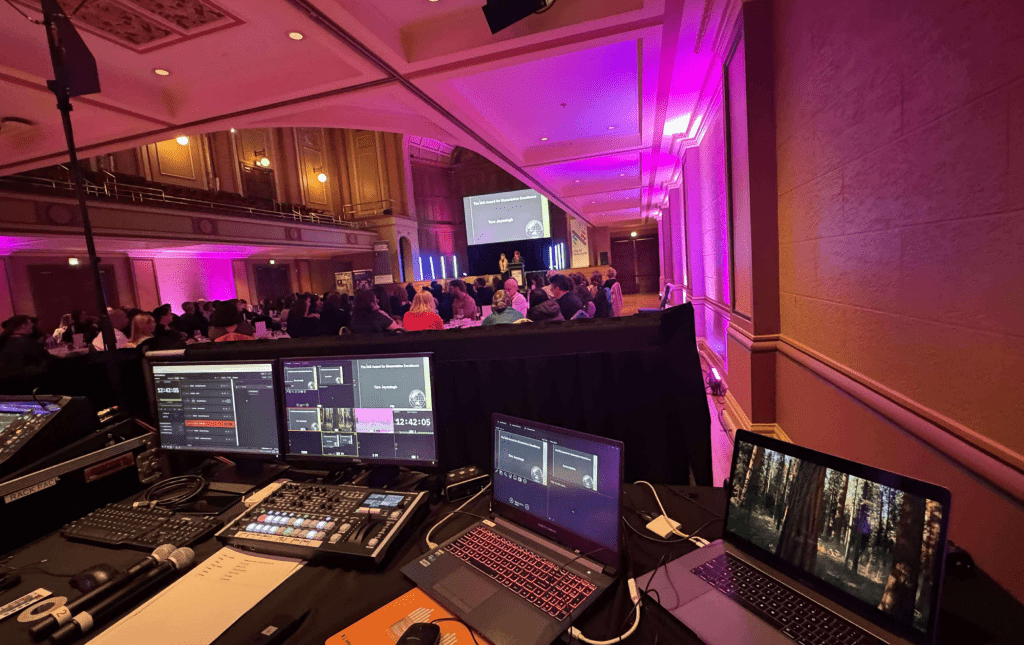
A good AV partner doesn’t just deliver what’s asked. They challenge, refine and improve it. They think about the flow, the pressure points, and the moments that matter most. They become an extension of your team, focused on the same outcome.
So, what should you choose?
There’s no single answer, and not every event needs the same approach. But if the goal is to create something that feels considered, runs smoothly, and leaves a lasting impression, it’s worth looking beyond, at innovation and what’s easiest on paper. Because the difference between an event that works and one that stands out often comes down to the decisions made early on.
And AV is one of the biggest of those decisions.